All posts tagged featured

Get my latest posts sent to your inbox
AND a free digital copy of my new book, Hooked (due 2013).

  • Practical insights to create habits that stick.
  • Actionable steps for building products people love and can't put down.
  • Behavioral techniques used by Twitter, Facebook, Pinterest, and others.

Hooking Users In 3 Steps: An Intro to Habit Testing

 The truly great consumer technology companies of the past 25 years have all had one thing in common: they created habits. This is what separates world-changing businesses from the rest. Apple, Facebook, Amazon, Google, Microsoft, and Twitter are used daily by a high proportion of their users and their products are so compelling that many of us struggle to imagine life before they existed.

But creating habits is easier said than done. Though I’ve written extensively about behavior engineering and the importance of habits to the future of the web, few resources give entrepreneurs the tools they need to design and measure user habits. It’s not that these techniques don’t exist — in fact, they’re quite familiar to people in all the companies named above. However, to the new entrepreneur, they largely remain a mystery.

I’ve learned these methods from some of the best in the business and put together an amalgamation of them that I call “Habit Testing.” It can be used by consumer web companies to build products that users not only love, but are hooked to.

HABIT TESTING

Habit Testing fits hand-in-glove with the build, measure, learn methodology espoused by the lean startup movement and offers a new way to make data actionable. Habit Testing helps clarify three things: 1) who your devotees are; 2) what part of your product is habit forming, if any; and 3) why those aspects of your product are habit forming.

Want To Hook Users? Drive Them Crazy. (An Intro to Variable Rewards)

Note: This post originally appeared in TechCrunch

Here’s the gist:

  • Rather than using conventional feedback loops, companies today are employing a new, stronger habit-forming mechanism to hook users—the desire engine.
  • At the heart of the desire engine is a variable schedule of rewards: a powerful hack that focuses attention, provides pleasure, and infatuates the mind.
  • Our search for variable rewards is about an endless desire for three types of rewards: those of the tribe, the hunt and the self.

In advertising, marketers reinforce a behavior by linking to the promise of reward. “Use our product,” they claim, “and you’ll get laid”; it’s the gist of many product pitches from soap to hamburgers.

But online, feedback loops aren’t cutting it. Users are increasingly inundated with distractions, and companies find they need to hook users quickly if they want to stay in business. Today, companies are using more than feedback loops. They are deploying desire engines.

Desire engines go beyond reinforcing behavior; they create habits, spurring users to act on their own, without the need for expensive external stimuli like advertising. Desire engines are at the heart of many of today’s most habit-forming technologies. Social media, online games, and even good ol’ email utilize desire engines to compel us to use them.

How to Design Behavior (The Behavior Change Matrix)

Here’s the gist:

  • The rising interest in the science of designing behavior has also sprouted dozens of competing, and at times conflicting, methodologies.
  • Though the authors often flaunt their way as the only way, there are distinct use cases for when each method is appropriate.
  • Behavior modification methods fall into four distinct types: amateur, expert, habitué, and addict.
  • Each behavior type requires the use of the appropriate technique to be effective. Using the wrong method leads to frustration and failure.

Everyone suddenly seems interested in messing with your head. GamificationQuantified SelfPersuasive TechnologyNeuromarketing and a host of other techniques offer ways to influence behavior. At the heart of these techniques is a desire to change peoples’ habits so that behavior change becomes permanent.

Here’s the problem: Until now, the explosion of methods for changing behavior has been a hodgepodge of author-centric noise. Reading all of the books, blogs, and blowhards can leave one confused by their seemingly conflicting advice. Pundits push their methods as cure-alls. For example, some argue that earning badges and leveling-up can inspire the clinically obese to become slim again. They can’t. Others claim that being good at anything requires strict goal setting and performance objectives. It doesn’t. The goal of this article is to help you identify which of the different techniques would be most effective for each type of behavior change.

How to Manufacture Desire: An Intro to the Desire Engine

Note: This post originally appeared in TechCrunch

Here’s the gist:

  • The degree to which a company can utilize habit-forming technologies will increasingly decide which products and services succeed or fail.
  • Addictive technology creates “internal triggers” which cue users without the need for marketing, messaging or any other external stimuli.  It becomes a user’s own intrinsic desire.
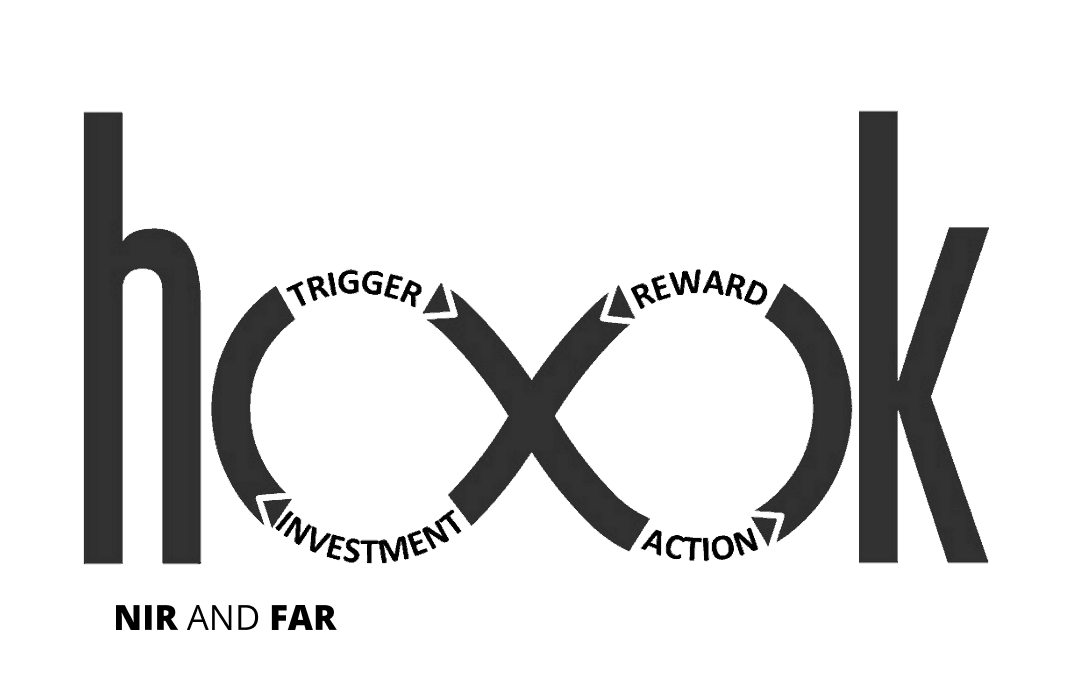
  • Creating internal triggers comes from mastering the “desire engine” and its four components: trigger, action, variable reward, and commitment.
  • Consumers must understand how addictive technology works to prevent being manipulated while still enjoying the benefits of these innovations.

Type the name of almost any successful consumer web company into your search bar and add the word “addict” after it. Go ahead, I’ll wait. Try “Facebook addict” or “Zynga addict” or even “Pinterest addict” and you’ll soon get a slew of results from hooked users and observers deriding the narcotic-like properties of these web sites. How is it that these companies, producing little more than bits of code displayed on a screen, can seemingly control users’ minds? Why are these sites so addictive and what does their power mean for the future of the web?

We’re on the precipice of a new era of the web. As infinite distractions compete for our attention, companies are learning to master new tactics to stay relevant in users’ minds and lives. Today, just amassing millions of users is no longer good enough. Companies increasingly find that their economic value is a function of the strength of the habits they create. But as some companies are just waking up to this new reality, others are already cashing in.

Habits Are The New Viral: Why Startups Must Be Behavior Experts

NOTE: This post originally appeared in Techcrunch

Here’s the gist:

  • In the age of infinite online distractions, successfulweb businesses must generate new user habits to stay relevant.
  • The strength of a web company’s user habits willincreasingly equate to its economic value.
  • Forming strong user habits is more importantthan viral growth.
  • The Curated Web will run on habits.

Face it; you’re hooked. It’s your uncontrollable urge to check for email notifications on your phone. It’s your compulsion to visit Facebook or Twitter for just a few minutes, but somehow find yourself still scrolling after an hour. It’s the fact that if I recommended a book to purchase, your mind would flash “Amazon” like a gaudy neon sign. If habits are defined as repeated and automatic behaviors, then technology has wired your brain so you behave exactly the way it wants you to.
In an online world of ever-increasing distractions, habits matter. In fact, the economic value of web businesses increasingly depends on the strength of the habitual behavior of their users. These habits ultimately will be a deciding factor in what separates startup winners and losers.

Where is the Web Going?

Here’s the gist:

  • Disruptive web innovation comes from changes in interface.
  • Interfaces, which make information easier to understand by mainstream users, create world-changing companies.
  • The next stage of the web is the Curated Web, which like the stages before, will create massive opportunities for entrepreneurs who see the trend.

Is this it?  Really?  Facebook wins, cashes in its chips, and we all go home?

Of course, there is more to come and it’s a future filled with sheer awesomeness.  Within the next few years, technology will improve your life in ways you can scarcely imagine.  But if you’re looking for where we’re headed, it’s useful to know where we’ve been and most importantly, we should know the catalyst driving us from one phase to the next.

Though tech types tend to focus myopically on the laws of hardware innovation, including those written by Moore, Metcalfe and Kryder, these principles focus on infrastructure, which is only the first phase of a rising technology wave.  After infrastructure, technology waves enter a platform and finally an application phase.  It is during the platform phases in particular that entrepreneurs build world-changing companies without much initial capital, a la Gates and Zuckerburg.  How do companies change user behavior so profoundly and produce massive growth, seemingly overnight?