Transform your habits. Transform your life.
Download your exclusive habit tracker template.

Hooked
How to Build Habit-Forming Products

4.6 (40,250 reviews)
“A must read for everyone who cares about driving customer engagement.”
– Eric Ries, Author, The Lean Startup
Buy the Book ››
Indistractable
Control Your Attention and Choose Your Life

4.5 (23,735 reviews)
“The best guide I’ve read for reclaiming our attention, our focus, and our lives.”
– Arianna Huffington, CEO, The Huffington Post
Buy the Book ››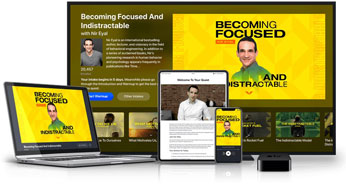
Distraction
Being “indistractable” and learning how to stay focused is exactly what it takes to get things done and get ahead.
How to Be Indistractable: Video by Nir Eyal
In this talk, I describe a new model for managing distraction—how to become “indistractable.” […]

Stay True to Your Priorities with a Schedule Maker
Ever wonder why your goals never get closer even though you keep knocking out your to-do list? Set a weekly schedule to match your time to your priorities. […]
Learn How To Avoid Distraction In A World That Is Full Of It
Distraction is a curse of modern life. Between our cell phones and computer screens, not to mention our kids and coworkers, our attention is constantly being diverted. […]
Building Habit-Forming Products
In an age of ever-increasing distractions, quickly creating customer habits is an important characteristic of successful products. What are the secrets of building services customers love? How can designers create products compelling enough to “hook” users?
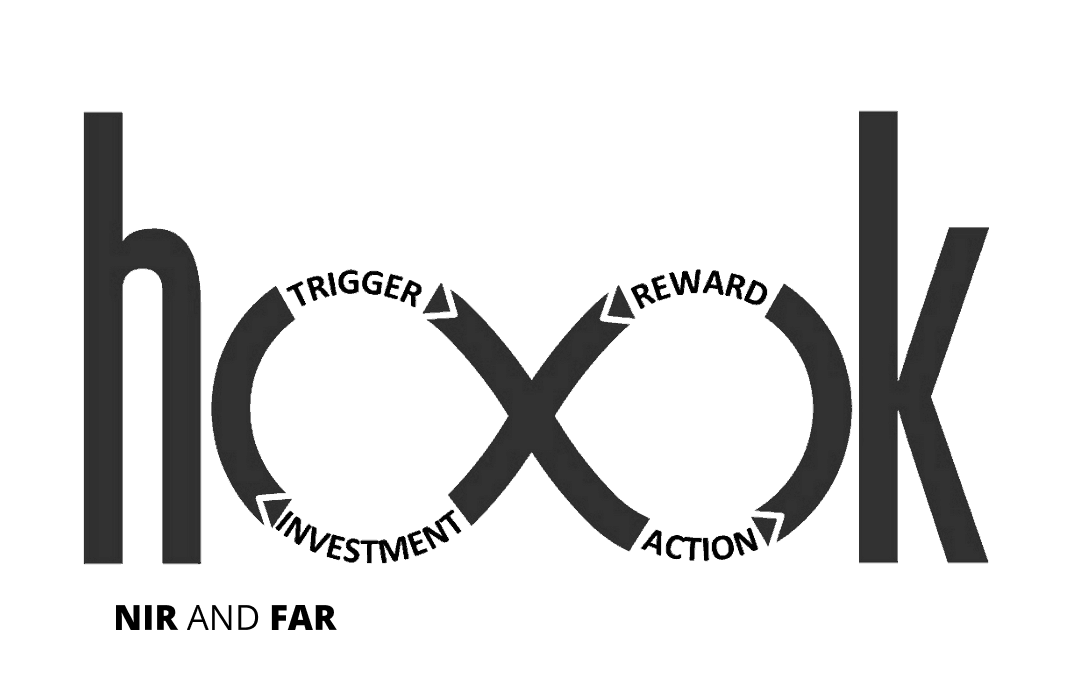
The Hooked Model: How to Manufacture Desire
What makes users keep going back to Facebook, LinkedIn, and other addictive websites? I developed the Hooked Model to map out how it works. […]
How to Start a Career in Behavioral Design
Whether called behavioral design, product psychology, or behavioral science, there’s never been this level of interest, excitement, or opportunities to understand the quirks of the human mind and use this knowledge to change how people live. […]
Variable Rewards: Want to Hook Users? Drive them Crazy
Companies today are building their products with a powerful habit-forming mechanism: variable rewards. This mechanism keeps users hooked, searching for three types of rewards: those of the tribe, the hunt, and the self. […]
Decision Making
On the road to changing your own behaviors, you’ll learn to combat potential stumbling blocks like confirmation bias and hyperbolic discounting.
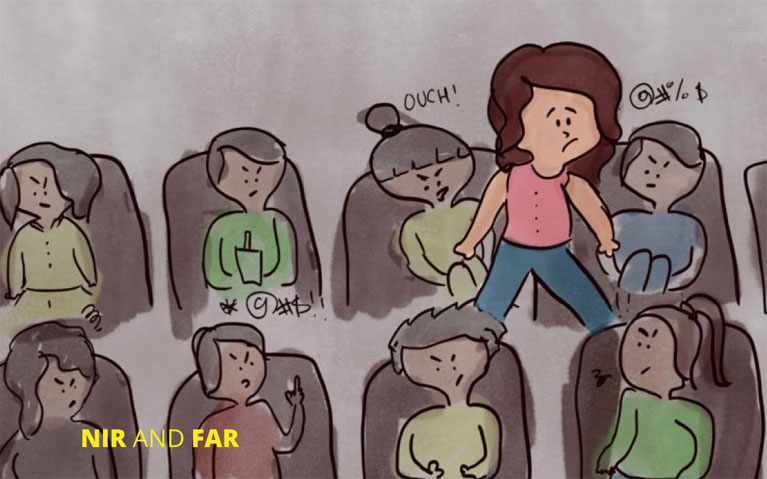
Fundamental Attribution Error: Who, Me?
When we screw up, we tend to believe things happened because of circumstances outside of our control. What happens when others fail? […]
Hindsight Bias: Why You Make Terrible Life Choices
“I knew it all along!” But did you? Don’t let this cognitive bias get you down. There are lots of way to beat it. […]
Extrinsic Motivation: Why You Make Terrible Life Choices
Work not fulfilling? You might be a victim of extrinsic motivation. Don’t worry, there are ways to turn extrinsic motivators into intrinsic ones. […]
Consumer Psychology
Learn how to incorporate Behavioral Design and Consumer Psychology in new product development and product strategy to create repeated user engagement and to reduce customer churn.
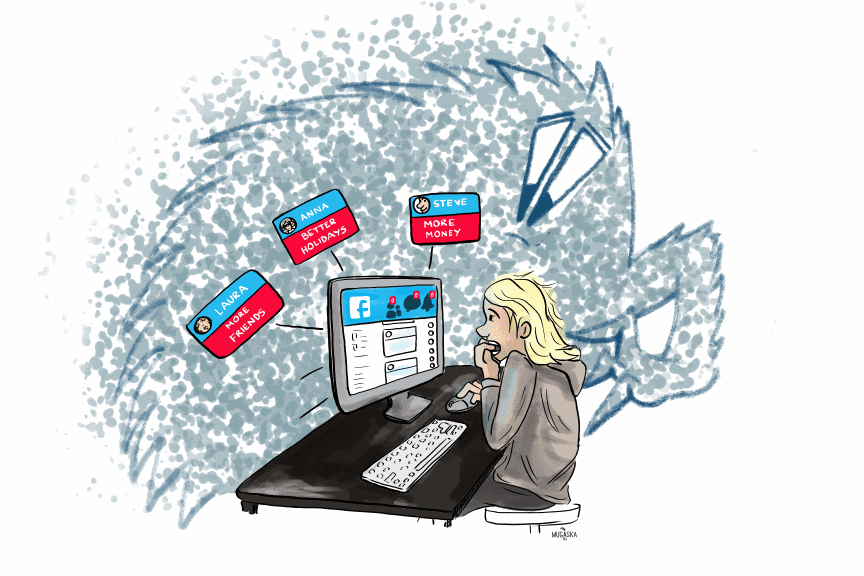
FOMO and Social Media
Most people at one time or another have been preoccupied by the idea that someone, somewhere, is having a better time, making more money, or leading a more exciting life. […]

Viral Loops or Viral ‘Oops’?
Why does every app need to know my friends’ email addresses? It’s all part of a viral loop the app developers are hoping you’ll create for them. Here’s how it works Here’s what you need to know. […]
A Free Course on User Behavior
This free course taps into the collective wisdom of some of the brightest minds in the field to help you better understand user behavior. […]